




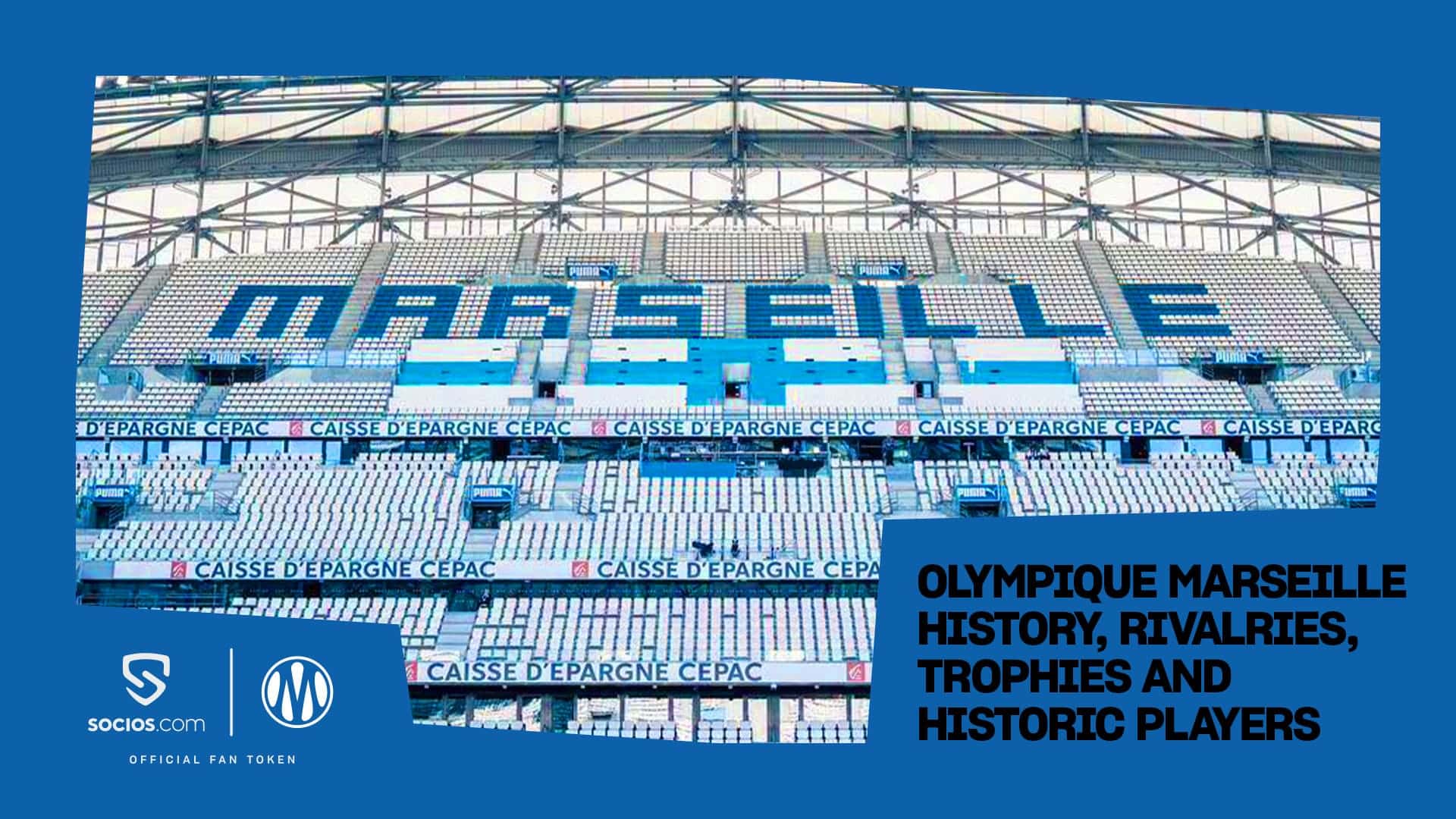
Olympique de Marseille (OM) play their home games at the CEPAC Vélodrome, one of France’s most iconic football grounds. Its history can be traced back to 1937, although the ground only acquired its current name in 2026.
For much of its history, the stadium was simply known as the Stade Vélodrome or Vélodrome, but that nomenclature has changed in the commercial era that defines the modern game. In July 2026, a new naming-rights agreement renamed the stadium the CEPAC Vélodrome.
What hasn’t changed in recent years is the capacity of the 67,000 stadium or the atmosphere that makes the CEPAC Vélodrome one of the most formidable arenas for football teams to visit. The city of Marseille has a deeply rooted football culture that reaches fever-pitch on matchdays.
What Is the CEPAC Vélodrome?
Situated at 3 Boulevard Michelet in the 8th arrondissement of Marseille in southern France, the CEPAC Vélodrome is Olympique de Marseille’s home stadium.
| Information | Details |
| Stadium | CEPAC Vélodrome |
| Traditional name | Stade Vélodrome / Vélodrome |
| Location | 3 Boulevard Michelet, 13008 Marseille, France |
| Home club | Olympique de Marseille |
| Capacity | 67,000 |
| Opened | 1937 |
| Original architect | Henri Ploquin |
| Stadium type | Football and multi-purpose stadium |
The modern CEPAC Vélodrome looks markedly different from the stadium that was erected more than 80 years ago thanks to a string of redevelopment projects. These have increased the ground’s capacity, removed its original cycling track – it’s no longer a velodrome in the literal sense of the word – and added the sweeping roof that now covers the stands.
CEPAC Vélodrome History
The late 1930s saw a flurry of development activity take place across France as the country geared up to host the 1938 World Cup. The Stade Vélodrome was inaugurated in 1937, having been designed by architect Henri Ploquin. The original stadium could accommodate around 35,000 spectators and was conceived as a multi-sport venue rather than purely a football ground.
This was an era when athletes were more fluid in terms of the sports they played, sometimes excelling in multiple disciplines. Spectators, too, were more receptive to the range of sports they witnessed, and this is evidenced in the opening programme when the stadium launched in 1937. Athletics and cycling events were staged before Olympique de Marseille faced Italian club Torino in a friendly to conclude the day’s action.
Prior to making the new Stade Vélodrome its forever home, OM had played their games in the Stade de l’Huveaune. In the subsequent decades, the Stade Vélodrome became synonymous with football, particularly once the cycling track that had given the stadium its name was finally removed in the mid-80s.
Ahead of the 1998 World Cup, more sweeping redevelopment followed as the stadium was expanded to around 60,000 seats. The Vélodrome hosted several matches during the tournament including France’s 3-0 group-stage victory over South Africa and the semi-final between Brazil and the Netherlands.
CEPAC Vélodrome and Marseille Supporters
The Vélodrome is more than merely a stadium where home and visiting supporters can assemble to cheer on their respective teams. For OM fans, it is hallowed ground and a natural focal point for the club’s noisy supporter culture. Hardcore fans can be found crammed into the Virage Nord and Virage Sud, situated behind the goals, and it’s here that most of the chants that reverberate around the ground emanate.
OM’s primary supporter groups serve as the twelfth man, urging their team on to run further and tackle harder, aided by a repertoire of ever-evolving chants, flags, and tifos that transform the stadium into a veritable fortress. For generations of supporters, travelling to the stadium has been a rite of passage, a ritual passed down through the years.
CEPAC Vélodrome and Fan Engagement
For supporters who live in Marseille, the CEPAC Vélodrome naturally forms the physical centre of the matchday experience. But following a football club is no longer about merely what happens inside the stadium for 90 minutes: much of the dialogue, debate, rivalry, and analysis occurs across social media and fan forums.
In the digital age, astute clubs are attuned to the opportunities that the web offers for growing their brand and reaching supporters in farflung regions, and OM are no exception. The forthcoming Olympique de Marseille Fan Token®, developed in partnership with The Chiliz Group, will provide a new way for supporters to participate in exclusive club-related digital experiences.
Supporters who hold the Fan Token® can participate in decision-making by voting in binding polls and access player meet-and-greets, as well as other experiences designed by the club.
CEPAC Vélodrome FAQs
- Where does Olympique de Marseille play? The CEPAC Vélodrome in Marseille, France.
- What is the capacity of the CEPAC Vélodrome? 67,000 seats.
- Where is the Vélodrome stadium? 3 Boulevard Michelet, 13008 Marseille, France.
- When was the Vélodrome built? 1937.
- Why is it called the Vélodrome? Because the original stadium contained a cycling track. Cycling was one of several sports staged there when it opened in 1937.
- Has the Vélodrome hosted World Cup matches? Yes, in both 1938 and 1998. Its 1938 fixtures included the Italy-Brazil semi-final, while the 1998 tournament included the Brazil-Netherlands semi-final.